Loading market data...
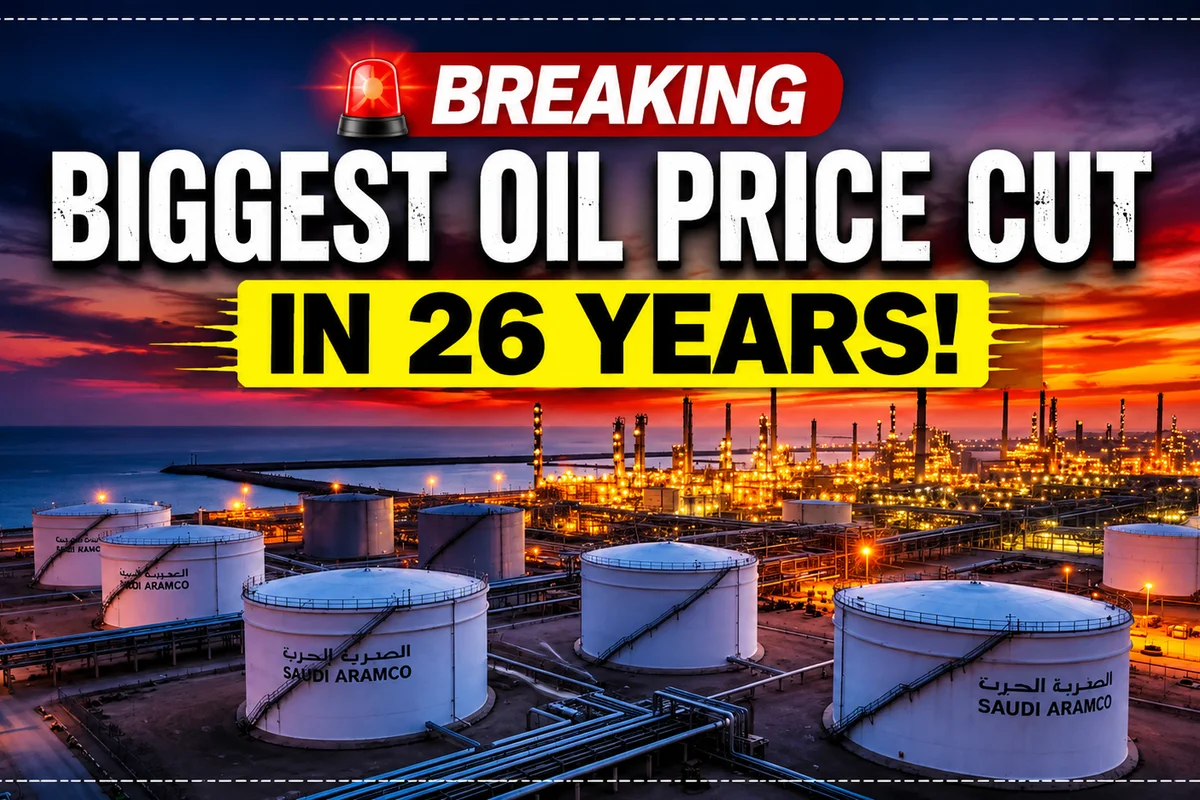
Saudi Arabia cuts Arab Light crude prices by $11 per barrel for Asia, marking the biggest reduction in 26 years. Here's why Aramco slashed oil prices and what it means for India and global crude markets.
Reviewed and Rewrite by
Rudransh Sangwan
Saudi Arabia has announced its largest oil price cut for Asian buyers in at least 26 years, reducing the official selling price (OSP) of its flagship Arab Light crude by $11 per barrel for August deliveries. The aggressive move comes as global crude supplies rise, competition intensifies among exporters, and geopolitical tensions in the Middle East begin to ease.
The decision by state-owned Saudi Aramco reflects changing dynamics in the global oil market after the reopening of the Strait of Hormuz, which has restored normal crude exports from the Gulf region. Falling crude prices and increasing production from OPEC+ members are now forcing major producers to compete more aggressively for market share in Asia, the world's largest oil-importing region.
The sharp reduction is significantly larger than market expectations and highlights Saudi Arabia's strategy to maintain its dominance in key Asian markets, including India, China, Japan, and South Korea.
Saudi Aramco has reduced the official selling price of Arab Light crude for August deliveries by $11 per barrel, pricing it at a $1.50 discount to the regional benchmark.
The cut exceeded analysts' expectations, with Bloomberg's survey forecasting an average reduction of around $8 per barrel.
| Particulars | Details |
|---|---|
| Producer | Saudi Aramco |
| Crude Grade | Arab Light |
| Price Cut | $11 per barrel |
| New Pricing | $1.50 discount to regional benchmark |
| Delivery Month | August 2026 |
| Biggest Reduction | In at least 26 years |
The price reduction comes after global oil markets witnessed a sharp correction following easing geopolitical tensions in the Middle East.
Crude prices have declined since the United States and Iran reached an agreement that helped restore shipping through the Strait of Hormuz, one of the world's most critical oil transit routes.
With exports returning to normal, Gulf producers now have greater flexibility to increase production, resulting in higher supply and increased competition among exporters.
At the same time, OPEC+ members have agreed to gradually raise production quotas, adding further pressure on global crude prices.
International crude oil prices have dropped sharply over recent weeks.
Brent crude is currently trading around $72 per barrel, significantly lower than the highs seen during the recent Middle East conflict.
Lower prices are largely driven by:
Saudi Arabia and Russia-led OPEC+ recently approved another production increase for August.
During the Iran conflict, many Gulf producers were unable to fully utilize their quotas because exports through Hormuz remained disrupted.
With shipping routes now functioning normally, countries such as Saudi Arabia, Iraq, and Kuwait are expected to increase production, adding more crude to global markets.
The higher supply outlook has intensified competition for Asian refiners, prompting Saudi Arabia to offer one of its biggest price reductions on record.
Asia remains the largest destination for Saudi crude exports.
Major importing countries include:
By significantly lowering prices, Saudi Arabia aims to protect its market share against competing producers from the Middle East, Russia, and other exporting nations.
Lower official selling prices also improve refinery margins for Asian buyers, making Saudi crude more attractive.
India, one of the world's largest crude oil importers, could benefit from lower Saudi oil prices if refiners increase purchases of discounted crude.
Lower crude costs generally support:
However, retail fuel prices in India also depend on taxes, exchange rates, refining costs, and marketing margins.
Saudi Arabia's decision marks a significant shift in its pricing strategy as global oil markets move from geopolitical supply concerns to a supply-driven environment. The record $11-per-barrel cut underscores the growing competition among crude exporters for Asian demand amid increasing production and easing Middle East tensions.
For energy-importing countries such as India, lower crude prices could provide relief through reduced import costs and softer inflation. Investors should continue monitoring OPEC+ production decisions, global demand trends, geopolitical developments, and movements in Brent crude prices, as these factors will determine the direction of oil markets over the coming months.
| Highlights | Details |
|---|---|
| Producer | Saudi Aramco |
| Price Cut | $11 per barrel |
| New OSP | $1.50 discount to benchmark |
| Biggest Reduction | At least 26 years |
| Brent Crude | Around $72 per barrel |
| Key Reason | Rising global supply and stronger competition |
| Major Buyers | India, China, Japan, South Korea |
| Market Impact | Lower crude costs, increased competition among exporters |
Saudi Arabia reduced oil prices due to rising global crude supply, easing Middle East tensions, and increasing competition among exporters for Asian buyers.
Saudi Aramco cut the official selling price of Arab Light crude by $11 per barrel for August deliveries.
Asia is Saudi Arabia's largest export market, with countries such as India, China, Japan, and South Korea accounting for a significant share of its crude sales.
Lower crude prices can reduce India's import costs, support refinery margins, and ease inflation, although domestic fuel prices depend on multiple factors beyond global crude prices.
Oil prices declined after the easing of Middle East tensions, restoration of shipping through the Strait of Hormuz, and higher production plans by OPEC+ countries.