

commodity
Kotak Securities Predicts Crude Oil Prices Could Surge to $120 Amid Global Tensions
13 hours ago
Reviewed and Rewrite by
Reetesh kumar


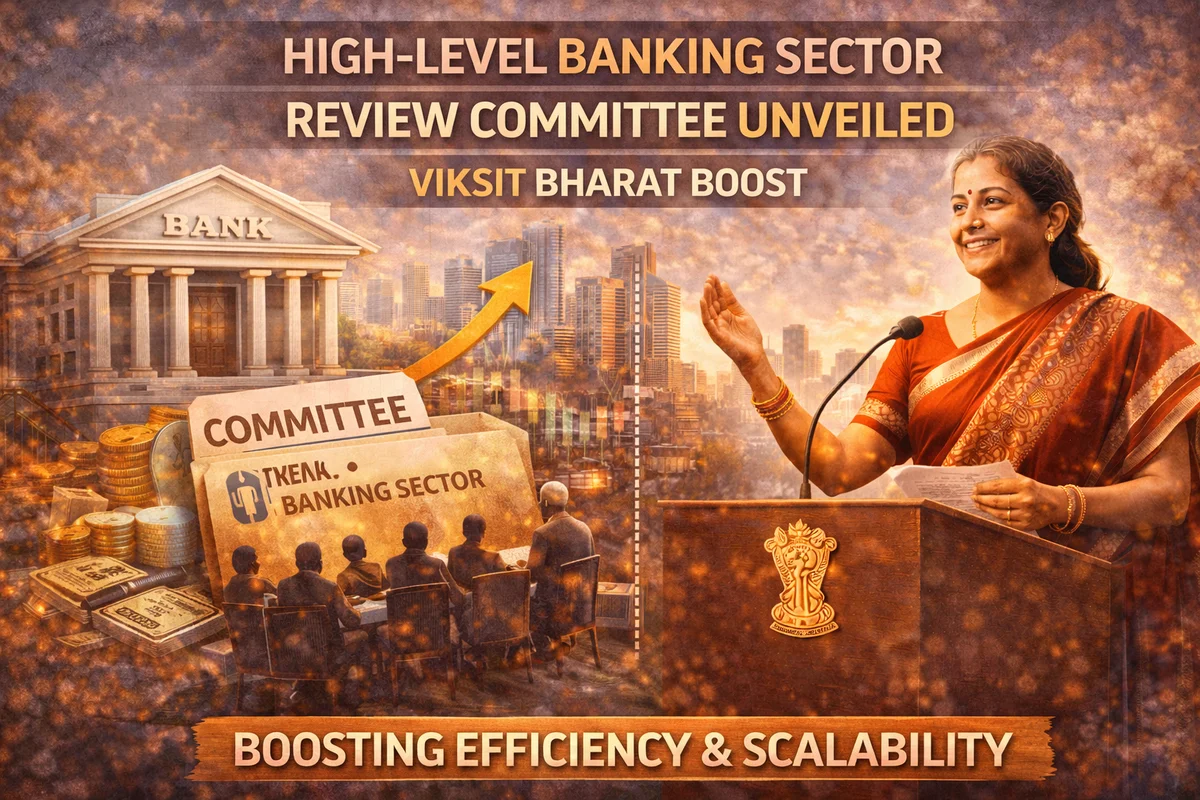
During the Union Budget 2026-27, Finance Minister Nirmala Sitharaman announced a strategic overhaul of India’s financial architecture to align with the goal of a developed nation by 2047.
A high-level committee will be established to review the banking sector’s structure, focusing on improving governance, efficiency, and scalability to support a modernizing economy. Parallelly, the government initiated the restructuring of PFC and REC, the nation’s primary power-sector lenders. This move aims to streamline financing for India’s ambitious energy transition, including rural electrification and the newly announced nuclear energy missions. Together, these reforms signal a pivot toward specialized, tech-driven financial institutions capable of sustaining long-term industrial growth.
Overview Finance Minister Nirmala Sitharaman unveiled plans for a high-level committee aimed at reviewing India's banking sector during the Union Budget presentation. The initiative is part of a broader vision for a developed India, known as Viksit Bharat, and seeks to enhance the banking system's efficiency and scalability.
Key Developments
Business Impact This review and restructuring could lead to significant changes in how financial institutions operate, potentially improving their ability to support economic growth. The banking sector's readiness to adapt to future challenges will be critical in maintaining stability and fostering development.
Market Context While the announcement has generated interest, the immediate market reaction remains to be seen. Investors are likely to monitor how these changes will unfold and their implications for the broader financial landscape.
Industry Context The banking sector in India has faced various challenges, including regulatory pressures and the need for modernization. This initiative reflects a proactive approach by the government to ensure that financial institutions can meet the demands of a rapidly evolving economy.
Looking Ahead As the committee begins its work, stakeholders will be keen to see the recommendations and how they might reshape the banking landscape in India.