

commodity
Kotak Securities Predicts Crude Oil Prices Could Surge to $120 Amid Global Tensions
13 hours ago
Reviewed and Rewrite by
Reetesh Kumar


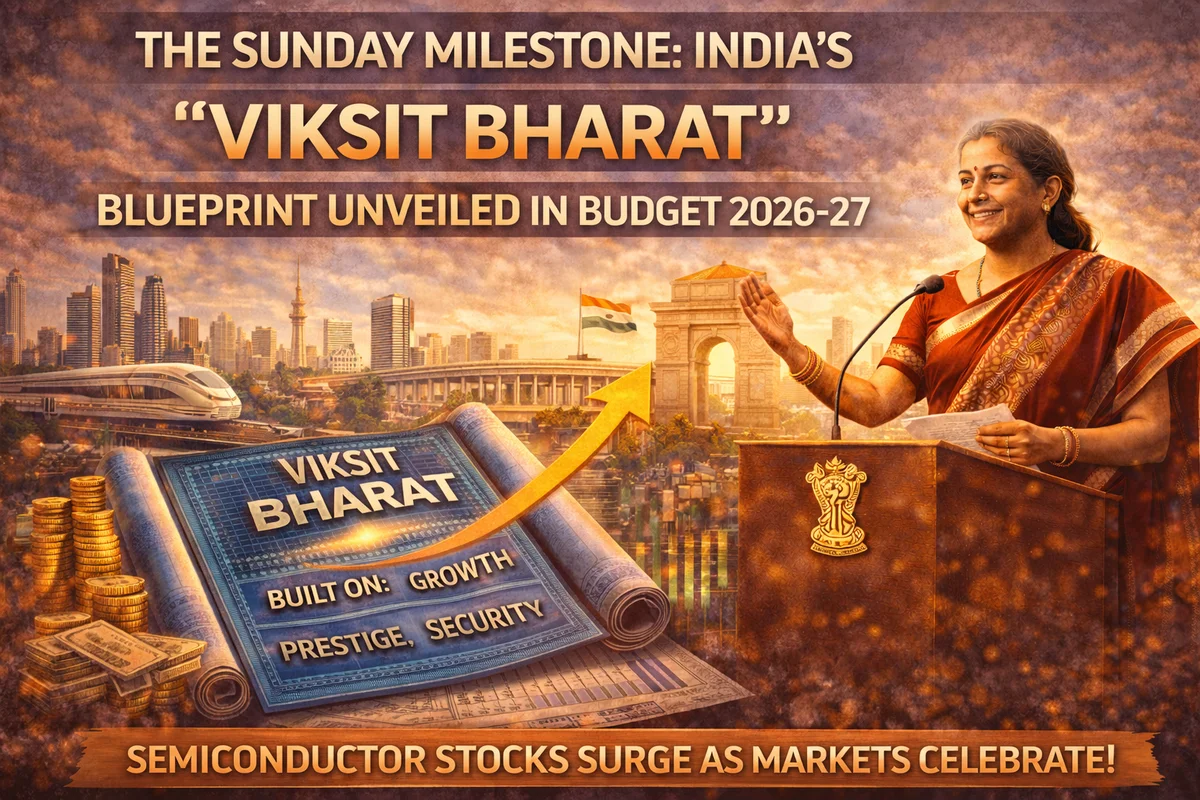
India’s Union Budget 2026-27, presented by Finance Minister Nirmala Sitharaman on a historic Sunday session, marks a decisive shift toward long-term structural growth and middle-class empowerment. Centered on the "Three Kartavyas" (Responsibilities), the budget balances a massive ₹12.2 lakh crore Capex push with significant tax relief, effectively making individuals earning up to ₹12.75 lakh per year tax-free under the New Tax Regime.
In a historic departure from tradition, Finance Minister Nirmala Sitharaman presented the Union Budget 2026-27 on a Sunday, marking her ninth consecutive speech and reinforcing India’s commitment to a "Developed India" by 2047. The budget centers on the "Reform Express," balancing aggressive infrastructure spending with targeted relief for the middle class.
1. Tax Revolution: The "Zero-Tax" Middle Class
The Finance Minister delivered a massive win for salaried professionals by further sweetening the New Tax Regime, effectively making it the go-to choice for millions.
2. The "Capex" Engine: ₹12.2 Lakh Crore Push
To sustain a projected 7.4% GDP growth, the government has increased the Capital Expenditure (Capex) target to a staggering ₹12.2 trillion.
3. Strategic "Frontier" Investments
The budget prioritizes self-reliance in cutting-edge technology and environmental sustainability:
4. Supporting the Backbone: MSMEs & Textiles
The "Viksit Bharat" Verdict
Budget 2026 is less about populist sops and more about structural resilience. By focusing on "Rare Earth Corridors," "Nuclear Energy Missions," and "Corporate Mitras," the government is building the "hard assets" required to insulate India from global trade frictions and tariff wars.
Important Disclaimer
Trading Risk: Sunday’s market session is highly volatile. This article is for informational purposes only. Consult a SEBI-registered advisor before making financial decisions.