

commodity
Kotak Securities Predicts Crude Oil Prices Could Surge to $120 Amid Global Tensions
13 hours ago
Reviewed and Rewrite by
Abhay Kumar



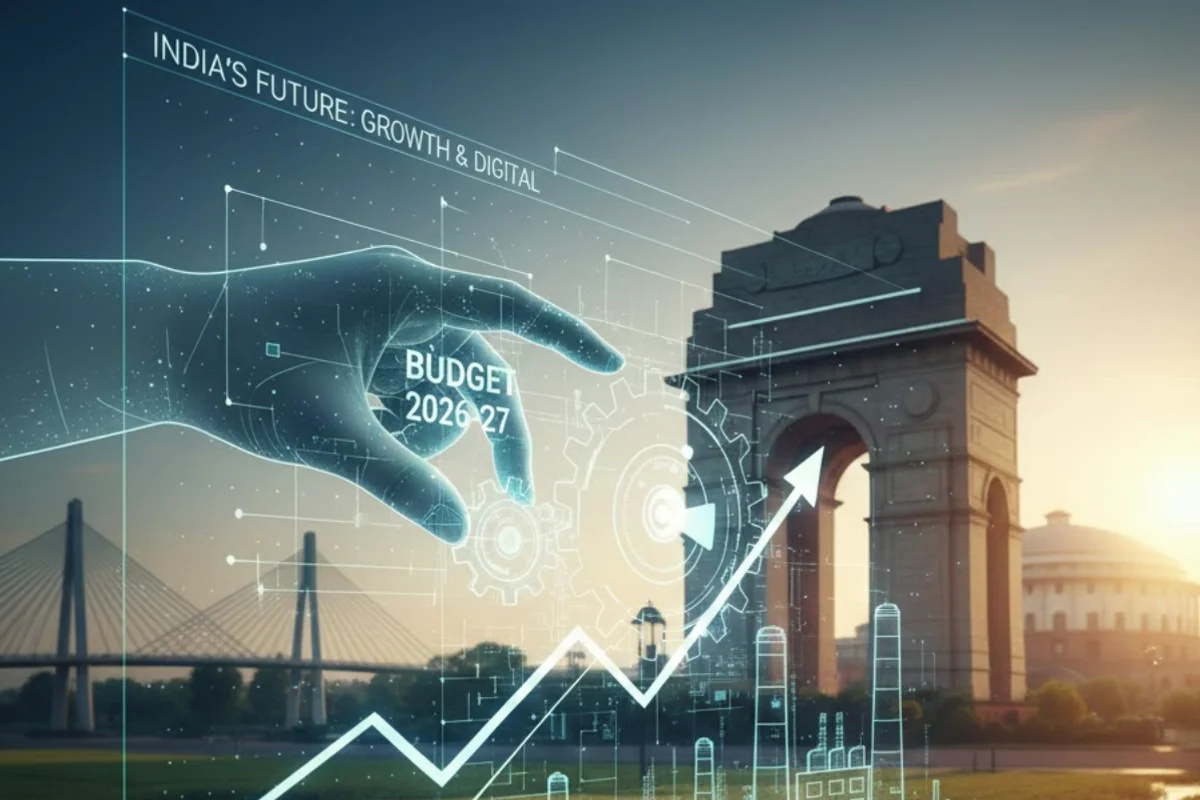
India's Union Budget 2026-27 has been unveiled with a clear strategic focus on bolstering supply-side growth and accelerating digital infrastructure development, aiming to position the nation as a global hub for high-value digital services and advanced manufacturing. With a significant ₹12.2 lakh crore in capital expenditure and an overarching infrastructure-linked package nearing $133 billion, the budget signals a decisive pivot towards outcome-driven economic expansion. This forward-looking fiscal policy is set to catalyze growth across key sectors, driven by long-term tax certainty, manufacturing incentives, and robust governance reforms.
The Catalyst: Digital Dominance and Infrastructure Impetus
The 2026-27 Budget serves as a powerful catalyst for India's digital economy, strategically placing data centers, cloud services, semiconductors, and Artificial Intelligence (AI) at the core of the nation's next growth cycle. A landmark tax holiday until 2047 has been announced for foreign companies providing cloud services to global clients through India-based data centers, offering an unprecedented 21-year tax certainty to the sector. This move aims to establish India as a competitive alternative to established digital hubs like Singapore and Japan, encouraging hyperscalers to expand their AI compute zones and multi-region cloud availability.
Concurrently, the infrastructure push remains a major growth driver, with the budget increasing the infrastructure outlay to ₹12.2 lakh crore from ₹11.2 lakh crore in the previous fiscal year. This sustained public capital expenditure is expected to accelerate large infrastructure projects, including the development of seven new high-speed rail corridors and the expansion of Dedicated Freight Corridors, thereby enhancing regional connectivity and improving logistics efficiency.
Financial Forensics: Budgetary Allocations & Economic Projections
The Union Budget 2026-27 reflects a strategic allocation of resources designed to strengthen India's productive capacity and foster long-term stability. The Economic Survey 2025-26 projects India's real GDP growth for FY27 to be in the range of 6.8-7.2%, underpinned by robust domestic demand and sustained public capital expenditure.
Here's a snapshot of key allocations and economic indicators:
| Category | FY 2025-26 (RE) | FY 2026-27 (BE) | Key Initiatives/Impact |
|---|---|---|---|
| Total Expenditure | ₹49.6 lakh crore | ₹53.5 lakh crore | Sustained public investment for growth. |
| Capital Expenditure | ₹11 lakh crore | ₹12.2 lakh crore | Drives infrastructure, manufacturing, and digital capacity. |
| Electronics Component Mfg. | ₹22,000 crore (RE) | ₹40,000 crore (BE) | To deepen domestic value addition in semiconductors & electronics. |
| Biopharma Shakti Initiative | - | ₹10,000 crore (5 yrs) | Expands R&D infrastructure and clinical trial capacity. |
| MSME Growth Fund | - | ₹10,000 crore | Supports small businesses, improves competitiveness. |
| Fiscal Deficit (as % of GDP) | - | 4.3% | Reflects commitment to fiscal discipline. |
RE: Revised Estimates; BE: Budget Estimates
The budget also simplifies India's IT services taxation framework, consolidating all IT services under one category with a 15.5% safe harbor margin and increasing the safe harbor threshold significantly, benefiting cloud-dependent enterprises.
Portfolio Impact: Sectors to Watch
Investors should closely monitor sectors directly benefiting from this supply-side and digital infrastructure push:
Moat Analysis: Building Enduring Advantages
For companies operating in these burgeoning sectors, building a sustainable "Moat" will be crucial.
The "Play" for investors lies in identifying companies with strong balance sheets, proven execution capabilities, and a clear strategy to capitalize on these long-term policy tailwinds. Evaluate firms with a demonstrable history of innovation and a commitment to R&D in areas like AI, quantum technologies, and advanced materials.
For further details on the Union Budget 2026-27, refer to the official document on the Ministry of Finance website. For insights into India's economic performance and outlook, the Economic Survey provides comprehensive analysis.
FinScann Verdict
India's 2026-27 Budget is a structurally sound document that prioritizes long-term economic growth through strategic supply-side interventions and an aggressive push for digital and physical infrastructure. The emphasis on creating a conducive environment for digital services, semiconductor manufacturing, and overall infrastructure development reflects a commitment to enhancing productivity and global competitiveness. The targeted incentives, particularly the extended tax holiday for cloud services, underscore a clear vision to make India a dominant player in the global digital landscape. While global uncertainties persist, the budget's focus on domestic demand drivers and fiscal prudence positions India for sustained expansion. Investors should favor companies demonstrating robust capabilities in these identified growth sectors, backed by technological prowess and an ability to leverage governmental policy support for scalable operations.
Disclaimer: For information only; not investment advice. Stock market investments carry risks. Please consult a SEBI-registered advisor before investing. FinScann assumes no liability for decisions made based on this report.