
commodity
Kotak Securities Predicts Crude Oil Prices Could Surge to $120 Amid Global Tensions
17 hours ago
Reviewed and Rewrite by
Shanaya Singh


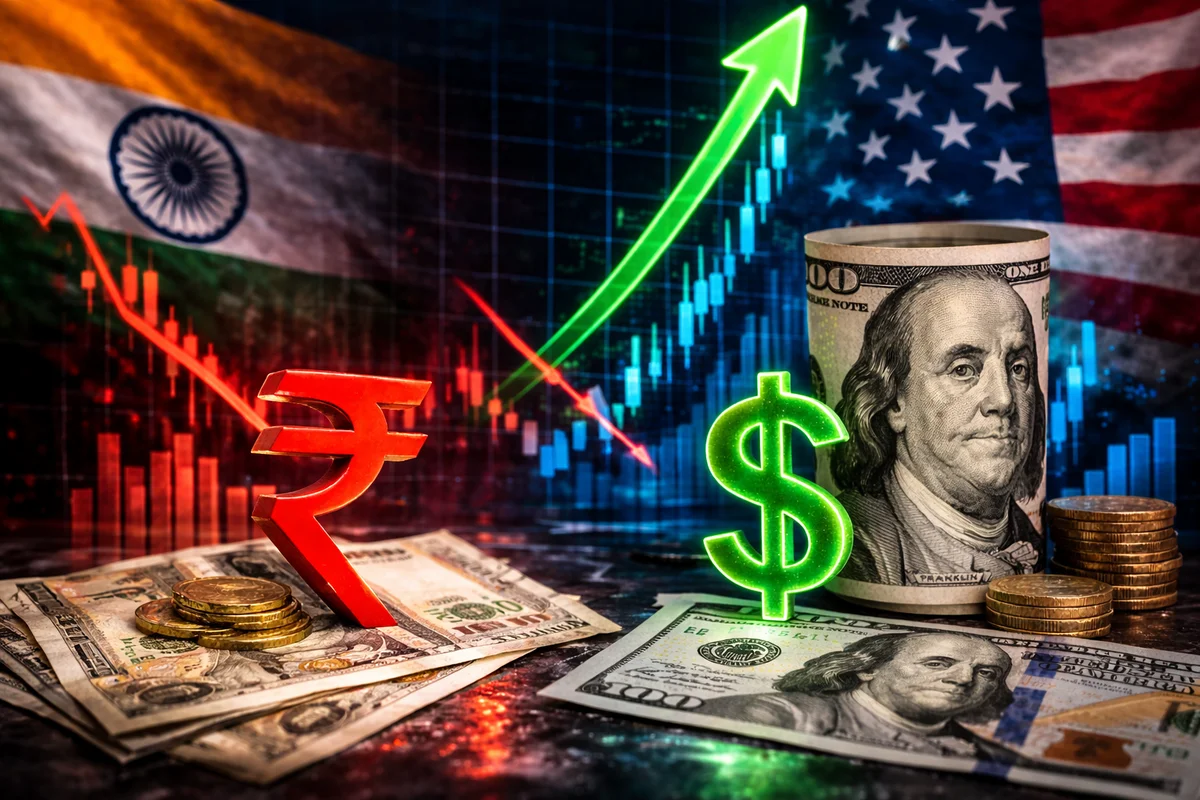
The US Dollar Index has surged toward the psychologically important 100 level as global investors shift capital toward safe-haven assets amid rising geopolitical tensions between the United States and Iran. Despite a sharp rise in crude oil prices triggered by instability in the Middle East, the dollar has strengthened significantly as investors seek stability during uncertain market conditions. Historically, periods of geopolitical risk tend to drive demand for the dollar, which is widely regarded as the world’s primary reserve currency and a safe store of value during financial turbulence.
| Currency Indicator | Current Trend |
|---|---|
| US Dollar Index | Approaching 100 |
| Weekly Dollar Gain | ~1.3% |
| Safe Haven Demand | Increasing |
| Global Risk Sentiment | Elevated |
| Market Driver | Middle East tensions |
The strengthening of the dollar reflects a classic risk-off market environment. When geopolitical uncertainty increases, institutional investors typically reduce exposure to riskier assets such as emerging market currencies and equities, while increasing holdings in US dollar-denominated assets.
Global currency markets have reacted sharply to the rising dollar, with several major currencies losing ground against the greenback. The Euro has remained relatively stable but is expected to record a weekly decline, while the Japanese Yen—traditionally another safe-haven currency—has weakened slightly as the dollar strengthens.
| Currency | Current Level | Weekly Trend |
|---|---|---|
| Euro | $1.161 | Slight weekly decline |
| Japanese Yen | 157.83 per dollar | Weaker |
| British Pound | $1.3358 | Slight gain |
| US Dollar Index | Near 100 | Rising |
Currency fluctuations reflect shifting capital flows across global financial markets. As US Treasury yields remain relatively attractive and geopolitical risk remains elevated, investors are increasingly favoring dollar-denominated assets over European and Asian currencies.
One of the most significant impacts of the dollar’s rally has been on emerging market currencies, particularly the Indian Rupee. The rupee recently touched a record low of 92.03 against the US dollar, highlighting the pressure that global risk sentiment and capital outflows can place on developing economies.
| Currency Pair | Exchange Rate |
|---|---|
| USD/INR | 92.03 |
| Previous Range | Lower levels earlier |
| Current Trend | Depreciation |
A weaker rupee increases the cost of imports, particularly commodities such as crude oil that are priced in dollars. Since India imports a large portion of its energy requirements, a stronger dollar combined with rising oil prices can significantly affect inflation and trade balances.
Normally, a stronger dollar tends to suppress commodity prices because commodities become more expensive for holders of other currencies. However, the current surge in crude oil prices reflects supply risks stemming from geopolitical tensions affecting the Middle East.
| Market Factor | Current Condition |
|---|---|
| Crude Oil Prices | Rising |
| Supply Risk | Middle East tensions |
| Shipping Routes | Disruptions feared |
| Energy Market Volatility | Increasing |
The unusual combination of rising oil prices and a strengthening dollar reflects the unique circumstances currently affecting global markets. While supply concerns are pushing energy prices higher, investors are simultaneously increasing their dollar exposure as a hedge against uncertainty.
The strengthening of the US dollar has wide-ranging implications for global trade, capital flows, and emerging market economies. Countries that rely heavily on imports priced in dollars are particularly vulnerable when the dollar appreciates rapidly.
| Economic Impact | Explanation |
|---|---|
| Import Costs | Higher due to strong dollar |
| Inflation Risk | Rising in import-dependent economies |
| Debt Servicing | Costlier for dollar-denominated loans |
| Capital Flows | Investors favor US assets |
Emerging markets often face increased financial pressure when the dollar strengthens because international investors tend to move capital toward safer US markets. This shift can weaken local currencies and increase volatility in domestic financial markets.
The US dollar’s strength during periods of geopolitical tension is rooted in its role as the dominant global reserve currency. Central banks, institutional investors, and sovereign wealth funds hold large reserves in dollars, making it the preferred asset during times of uncertainty.
| Safe Haven Factor | Explanation |
|---|---|
| Global Reserve Currency | Dollar dominates global reserves |
| US Treasury Market | Deep and liquid |
| Investor Confidence | High during crises |
| Global Trade Pricing | Most commodities priced in USD |
Because of these factors, geopolitical conflicts often trigger significant demand for dollars as investors seek stability and liquidity in uncertain times.
Currency fluctuations often influence equity markets, particularly sectors that are sensitive to exchange rate movements. Export-oriented industries may benefit from a weaker domestic currency, while companies reliant on imported inputs may face margin pressure.
| Sector | Impact |
|---|---|
| Exporters | Potential benefit |
| Import-dependent industries | Cost pressures |
| Energy companies | Mixed impact |
| Global commodity markets | Increased volatility |
Stock markets often react to currency movements because exchange rates affect corporate earnings, trade flows, and capital investment decisions.
The future trajectory of the US dollar will depend on several factors, including geopolitical developments, interest rate expectations, and global economic growth. If tensions in the Middle East persist, safe-haven demand for the dollar could remain strong.
| Key Market Driver | Possible Outcome |
|---|---|
| Geopolitical tensions | Continued dollar strength |
| Oil price volatility | Inflation concerns |
| Global risk sentiment | Higher currency volatility |
| Monetary policy expectations | Dollar movement shifts |
Currency markets are highly sensitive to macroeconomic developments, and traders will continue monitoring geopolitical events, central bank policies, and commodity price trends to assess the direction of global currencies.
The recent surge in the US Dollar Index toward the 100 level highlights the powerful role of safe-haven demand during periods of geopolitical uncertainty. Rising tensions between the United States and Iran have triggered capital flows toward the dollar even as crude oil prices climb due to supply risks in the Middle East.
For emerging economies like India, a stronger dollar can create economic challenges by increasing import costs and weakening domestic currencies. At the same time, global investors are likely to remain cautious as currency volatility and geopolitical uncertainty continue to shape financial markets.