

commodity
Kotak Securities Predicts Crude Oil Prices Could Surge to $120 Amid Global Tensions
13 hours ago
Reviewed and Rewrite by
Rudransh Sangwan


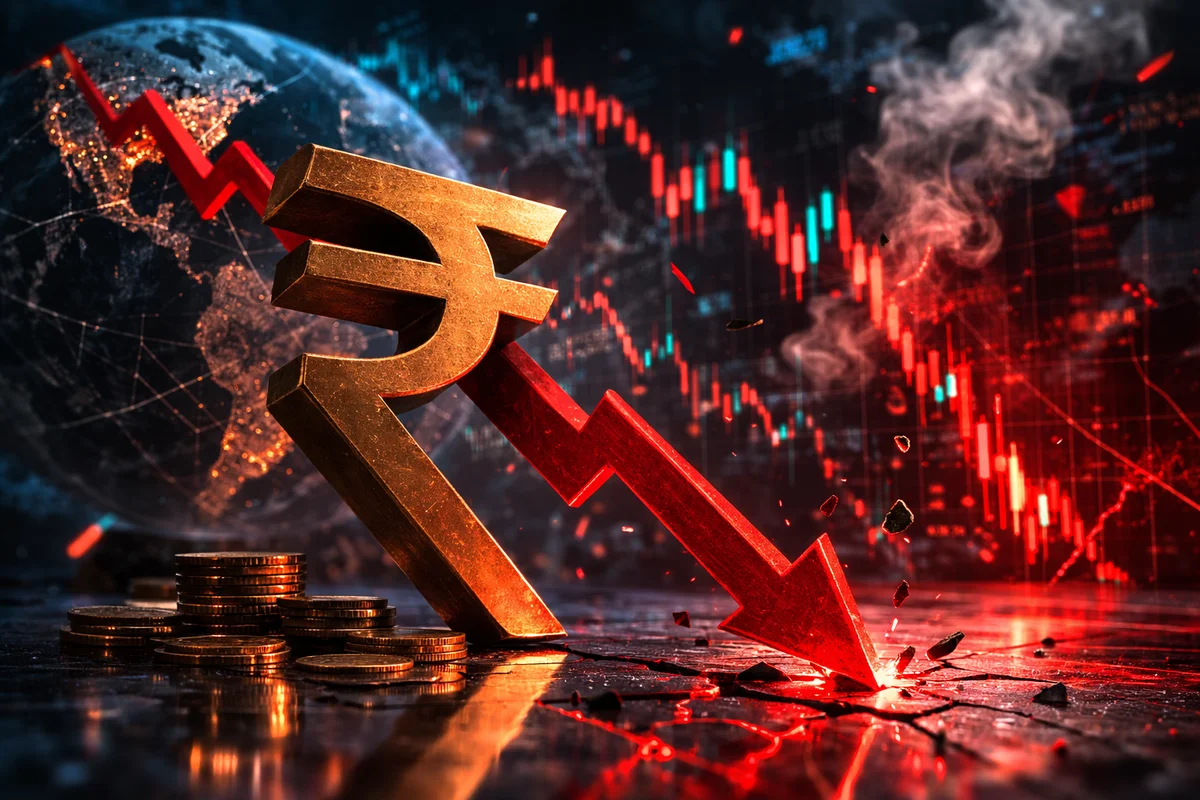
The Indian rupee has plunged to a record low of ₹92.5 against the US dollar, reflecting mounting pressure from rising global tensions, a strong dollar, and surging crude oil prices. The sharp depreciation is increasing concerns over India’s import bill, inflation outlook, and foreign capital flows. Investors and policymakers are now closely watching the Reserve Bank of India’s next move as currency volatility rises across emerging markets.
India’s currency has entered historic territory after the Indian rupee slid to around ₹92.5 against the US dollar, marking its weakest level ever. The fall comes amid a perfect storm of global tensions, surging crude oil prices, and a strengthening US dollar. The sharp move has rattled currency markets, pushed investors toward safe-haven assets, and raised fresh concerns about inflation and capital flows in Asia’s third-largest economy.
Currency traders say the latest drop reflects both external shocks and structural weaknesses in emerging-market currencies. Rising geopolitical tensions and oil supply fears have strengthened the dollar globally, while energy-importing countries such as India are facing a surge in their import bills.
For policymakers and investors alike, the key question now is: Is this the beginning of a deeper currency crisis—or just a temporary shock?
The recent slide in the rupee is not caused by a single factor but by a combination of global economic forces.
Oil prices have surged due to Middle East tensions, pushing Brent crude close to the $100 mark in recent weeks. Since India imports nearly 80% of its crude oil, higher prices sharply increase the country’s demand for dollars to pay for energy imports.
As demand for dollars rises, the rupee weakens because more local currency is required to buy the same amount of foreign currency.
The US dollar has strengthened globally due to geopolitical uncertainty and global capital flows moving into safe-haven assets. Emerging market currencies—including the rupee—typically weaken when the dollar rallies.
Foreign investors have been selling Indian assets amid rising global uncertainty and oil volatility. Such outflows increase demand for dollars in the forex market, putting additional pressure on the rupee.
Periods of geopolitical conflict tend to push investors away from emerging markets toward safe-haven currencies such as the US dollar and Swiss franc.
The rupee’s journey against the dollar reflects both structural economic changes and global crises.
| Year | USD/INR Level | Key Event |
|---|---|---|
| 2013 | ~₹68 | Global capital outflows crisis |
| 2020 | ~₹76 | COVID-19 global market shock |
| 2022 | ~₹83 | Global inflation and interest rate hikes |
| 2025 | ~₹90 | Strong dollar cycle |
| 2026 | ₹92.5 | Oil surge and geopolitical tensions |
The steady depreciation over the past decade highlights the growing influence of global macroeconomic forces on the rupee.
When the rupee weakens, imports become costlier because companies must spend more rupees to purchase the same amount of foreign goods.
| Sector | Impact |
|---|---|
| Oil & Energy | Higher fuel costs |
| Electronics | Rising import prices |
| Aviation | Expensive jet fuel |
| Manufacturing | Higher raw material costs |
Higher import costs eventually feed into inflation, which could pressure household budgets and corporate margins.
A weaker rupee also has a silver lining. Export-oriented sectors benefit because their dollar revenues translate into higher rupee earnings.
| Sector | Benefit |
|---|---|
| IT Services | Higher rupee revenue |
| Pharmaceuticals | Competitive export pricing |
| Textiles | Boost in global competitiveness |
This is why IT stocks often perform better when the rupee weakens.
The currency volatility is also affecting corporate balance sheets and hedging strategies.
Companies that borrow in foreign currencies face higher repayment costs when the rupee weakens. At the same time, firms using forex derivatives for hedging may experience unexpected losses due to sudden exchange rate movements.
Market volatility has also increased hedging costs, forcing companies to rethink their risk management strategies.
The Reserve Bank of India (RBI) has already stepped into the forex market by selling dollars to limit extreme volatility. Analysts estimate that the central bank has used billions of dollars from its reserves to stabilize the currency.
Possible policy responses include:
| RBI Action | Expected Effect |
|---|---|
| Dollar selling | Stabilize currency temporarily |
| Interest rate adjustments | Support capital inflows |
| Liquidity management | Reduce forex volatility |
| Strategic intervention | Prevent panic in markets |
However, central banks usually aim to smooth volatility rather than defend a specific exchange rate level.
If oil prices cool and geopolitical tensions ease, the rupee may stabilize in the ₹91–₹92 range.
If oil prices rise sharply and global markets remain volatile, the rupee could weaken further toward ₹94 or even ₹95 per dollar.
Some analysts believe the rupee could recover in the second half of the year if global interest rates stabilize and capital inflows return.
Several key indicators will determine the rupee’s next move.
| Indicator | Why It Matters |
|---|---|
| Oil prices | India’s largest import cost |
| US interest rates | Drives global dollar strength |
| FII flows | Determines capital inflows/outflows |
| RBI intervention | Controls short-term volatility |
Currency markets often react quickly to geopolitical developments, making the rupee especially sensitive to global news.
The rupee’s fall is part of a broader trend across emerging markets. Many Asian currencies have weakened as global investors shift capital toward safer assets during geopolitical crises.
For India, the challenge is balancing currency stability with economic growth. While a weaker rupee boosts exports, excessive depreciation can trigger inflation and financial instability.
The rupee crossing ₹92.5 per dollar marks a historic moment for India’s currency markets. While the fall reflects global economic pressures, it also highlights structural vulnerabilities such as high oil import dependence and exposure to global capital flows.
If oil prices remain elevated and geopolitical tensions persist, the rupee may remain volatile in the coming months. However, strong economic fundamentals and central bank intervention could prevent a full-scale currency crisis.
For investors, the current volatility may create opportunities in export-oriented sectors such as IT, pharmaceuticals, and specialty manufacturing.